
Chapter 02 / 10
02 / First, make the booking work
First, makethe booking work.
Our first delivery goal is a complete flight booking: the traveler picks their event, finds a flight, pays and receives a real ticket. PIVOT sees the booking and knows who can help if something changes. We would build and test that whole journey, not just the search.
From the competition to a confirmed ticket.
EXAMPLE 02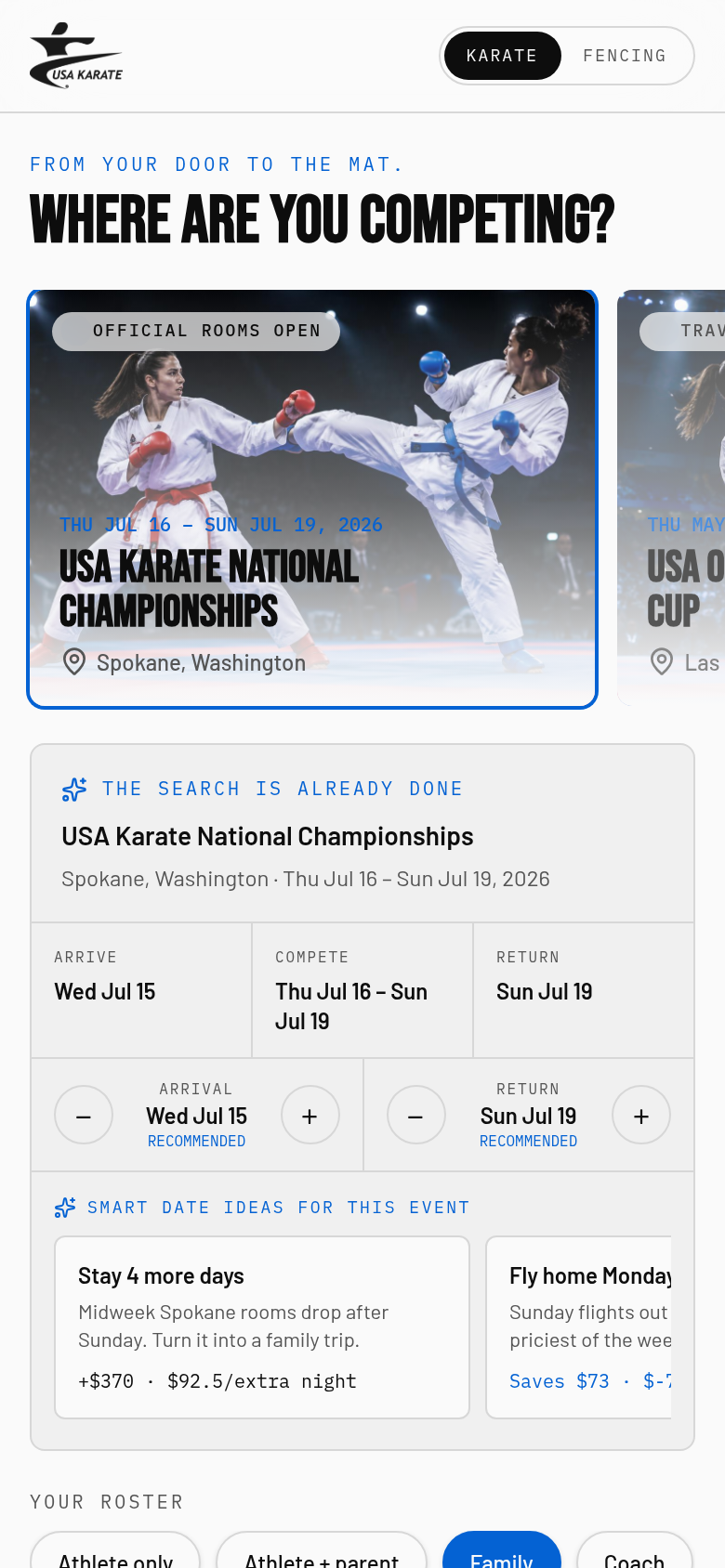
We build the whole booking journey
They’re going to compete. Start there.
Who is going, when and from where
Show a flight they can actually book
Show available flights and check the current price
Get their details and take payment
Include any booking fee PIVOT sets
Issue the ticket. Send confirmation.
The travel provider issues the ticket and confirmation
PIVOT sees it. Someone can help.
PIVOT sees the booking, checks payment and knows who can help
The demo establishes the traveler experience. Our build connects it to flight search, payment, ticketing and support. Live transactions are part of delivery, not enabled in this demo.
We already know why they're going
The event gives us the city, venue and competition dates. Travelers shouldn't have to work that out again.
We take it through to confirmation
Check the current fare, collect the details and payment, book with the provider and send confirmation.
Support belongs in the same journey
PIVOT gets the booking record. The traveler gets confirmation and a clear contact for help.
Let’s talk through the details
Here’s how we would deliver it.
Our response to your requirements.
We would start with flights for a specific event. The traveler chooses a flight, enters their details and pays, including any booking fee PIVOT sets. We create the booking with the travel provider and send confirmation.
PIVOT must be able to find that booking again and get a change or cancellation handled. Before we build, we need to confirm which provider lets us search, issue tickets and support those bookings.
Booking inside T2C keeps the traveler in one place. PIVOT can set its fee and see the booking. But the travel provider must let us complete the booking, and we need to agree who takes payment and handles support.
Sending travelers to a provider's website takes less work to launch, especially for hotels. That provider takes over checkout and support. We still need an agreement on how bookings are tracked and when PIVOT earns commission.
We would keep flight booking inside T2C if the provider supports the whole process. Keep approved links where they already make sense.
Let the traveler pay inside the experience. We would show PIVOT the payment and booking together, including failures, refunds and protection against duplicate charges.
With PIVOT and the travel partner, we would agree who charges the card, where the money goes, supported currencies and disputed-charge responsibility. We would also confirm processing costs and how PIVOT's booking fee is collected.
Payment-provider selection and access are kickoff decisions. We would use that provider's secure checkout so card details aren't stored in T2C.
An athlete traveling alone needs something different from a family or a coach. We would use that context to show sensible options, usually starting with economy.
Travelers can choose their dates and any available upgrades. The travel provider decides what is actually available and which fare rules apply. We wouldn't promise an upgrade or price the provider hasn't confirmed.
The USA Karate and USA Fencing demos bring the recommendation to life: each organization's brand, its events, adjustable dates, one itinerary and optional experiences. That gives PIVOT a concrete experience to review before the production build.
The next step is connecting that experience to approved providers and testing real bookings, payments and tickets. The team view shows how we would give PIVOT visibility into those bookings. These are presentation demos, not live transaction systems.
Based on: Strategy §§6–8, 20–21 · RFP booking engine & payment